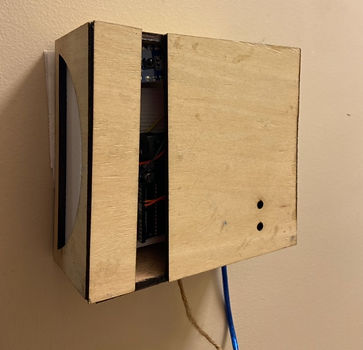
Switch-IR
After taking two circuit classes, my biomedical design class gave us a very open-ended prompt. We had to design something that we would build using parts cut using a laser cutter and Arduino parts. I learned rudimentary Arduino coding during a different freshman year design class. I realized that it would be a good opportunity to develop my circuit design skills. I designed a prototype for a device that uses an infrared sensor to flip a light switch on an off from across the room. I used a chip to hard wire a motor that flipped the switch beneath the device but as this project taught me, I hadn't done enough research into the strength of the motor I was planning on using to flip the switch. The rail system wasn't strong enough to flip the switch. I should have done more research into the torque of the motor used to ensure it would be able to flip the switch. Thankfully, outside of the motor being too weak, the project was overall a success. I learned how to research into chips and how to understand the basics of infrared sensors and how to program an Arduino using them. The project helped me to expand my understanding of programming and circuitry. The final project was submitted to my professor along with a design document shown below. This document was a careful explanation and study into the design of the device and rudimentary prototyping. The FMEA (Failure Mode and Effect Analysis) and Bill of Materials from this document are good example of charts used to convey important information about a design project. I will definitely rely more on charts in future.